Xisiid Intelligence (羲悉智能), an AI NEO LAB exploring new paradigms for next-generation artificial intelligence, made its public debut at the recent Shanghai Pujiang Innovation Forum.
At the forum, the company introduced its technical vision and multidisciplinary team and unveiled its proprietary Brain-Inspired Self-Evolving Foundation System. Xisiid Intelligence also announced that it had raised tens of millions of RMB in seed funding, which will primarily support continued R&D and the joint development of domain applications.

AI’s Next Phase: From Content Generation to Reliably Completing Complex Tasks
The way large language models (LLMs) are evaluated is reaching a pivotal transition. Industry attention is shifting beyond generation and reasoning performance on static benchmarks toward a more demanding question: can AI reliably complete complex, real-world tasks?
In high-stakes professional fields such as investment banking, management consulting, and cross-border legal practice, a single assignment may require processing large volumes of heterogeneous documents, coordinating workflows across multiple software applications, and reasoning through complex, multi-step processes with iterative verification.
Today’s generation-centric LLMs, however, still struggle with complex, long-horizon tasks. As task length and complexity increase, they remain vulnerable to reasoning drift, compounding errors, and inconsistent execution. Frontier agent benchmarks highlight this gap. Across both APEX-Agents, which evaluates complex tasks spanning multiple applications, and Harvey LAB, which assesses professional legal deliverables, even state-of-the-art models continue to face challenges in reliably completing end-to-end work. Recent public results from Harvey LAB, for example, show that under its rigorous All-Pass standard, leading models still achieve end-to-end task completion rates below 20%.
“AI’s generation and reasoning capabilities have already reached remarkable levels. But in mission-critical environments, the real test is whether AI can reliably complete complex, multi-step work over extended task horizons, like a human expert.”
Dr. Chua Yam Song, Founder of Xisiid Intelligence
“Increasing model parameters alone cannot solve the challenges of reliable execution and cumulative learning,” Dr. Chua said. “Our approach, Brain-inspired Intelligence for Artificial Intelligence (BI4AI), goes beyond replicating the physical structure of the brain. Instead, we draw on the principles by which biological intelligence organizes cognition, memory, learning, and adaptive feedback — moving AI from a computation-centric paradigm toward a memory-centric one.”
A Dual-System Architecture for Reliable Execution and Continual Learning
To translate this memory-centric philosophy into an engineering architecture, Xisiid Intelligence has developed a dual-system architecture comprising System 1 and System 2, integrating a proprietary language model layer with a structured memory layer.

1System 1: Fast Execution Through Latent-Space Interaction
System 1 serves as the high-speed execution layer for frequent tasks. Powered by Xisiid’s proprietary latent exchange protocol, it enables vector-based interaction at the internal representation layer, allowing functional modules to exchange states directly rather than relying on decoding and encoding text.
Conventional agent frameworks typically coordinate modules through prompts and natural-language context. As task horizons expand, larger context windows increase token overhead while important information can become diluted or lost. By using a latent exchange protocol, Xisiid Intelligence aims to reduce communication overhead and information loss across complex workflows.
2System 2: Task-Centric Hierarchical Memory
System 2 functions as a task-centric hierarchical memory system. Beyond factual knowledge, it captures reusable workflows, decision heuristics, and experience derived from previous task execution.
When the system encounters non-standard or unfamiliar situations, it can retrieve relevant prior experience to provide task-specific constraints, execution guidance, and decision support. This allows accumulated experience to become reusable rather than requiring each task to effectively start from scratch.
Together, System 1 and System 2 form a continual-learning loop driven by real-world task feedback:
Execution → Feedback → Generalization → Consolidation
Within this loop, validated skills and experience can be progressively consolidated into reusable system and model capabilities. The evolution process is governed by evaluation, gating, and rollback mechanisms designed to keep updates controlled and reversible.
As experience accumulates, the system can progressively adapt to the workflows, knowledge, and operating environments of individual professionals and organizations.
Xisiid Intelligence reports that the architecture has already completed initial milestone validation. In benchmark evaluations covering complex professional tasks, its agent system — powered by models of approximately 30 billion parameters — has demonstrated performance comparable to frontier models with more than one trillion parameters, effectively supporting fully private, on-premise deployment.
A Multi-disciplinary Team Advancing Brain-Inspired Intelligence
Xisiid Intelligence’s technical roadmap is grounded in years of interdisciplinary research and engineering across computational neuroscience, brain-inspired computing, artificial intelligence, and large-scale systems.
Founder Dr. Chua Yam Song has extensive experience in computational neuroscience and neuromorphic computing. His previous roles include serving as Principal Investigator for the Neuromorphic Program at the Agency for Science, Technology and Research (A*STAR), Singapore; Chief Researcher of Neuromorphic Computing at Huawei 2012 Labs; Chief Expert at China Electronics Technology Group Corporation (CETC); and Director of the Neuromorphic Computing Laboratory at the China Nanhu Academy of Electronics and Information Technology. He currently leads and participates in several Chinese national research initiatives, including projects under the China Brain Project.
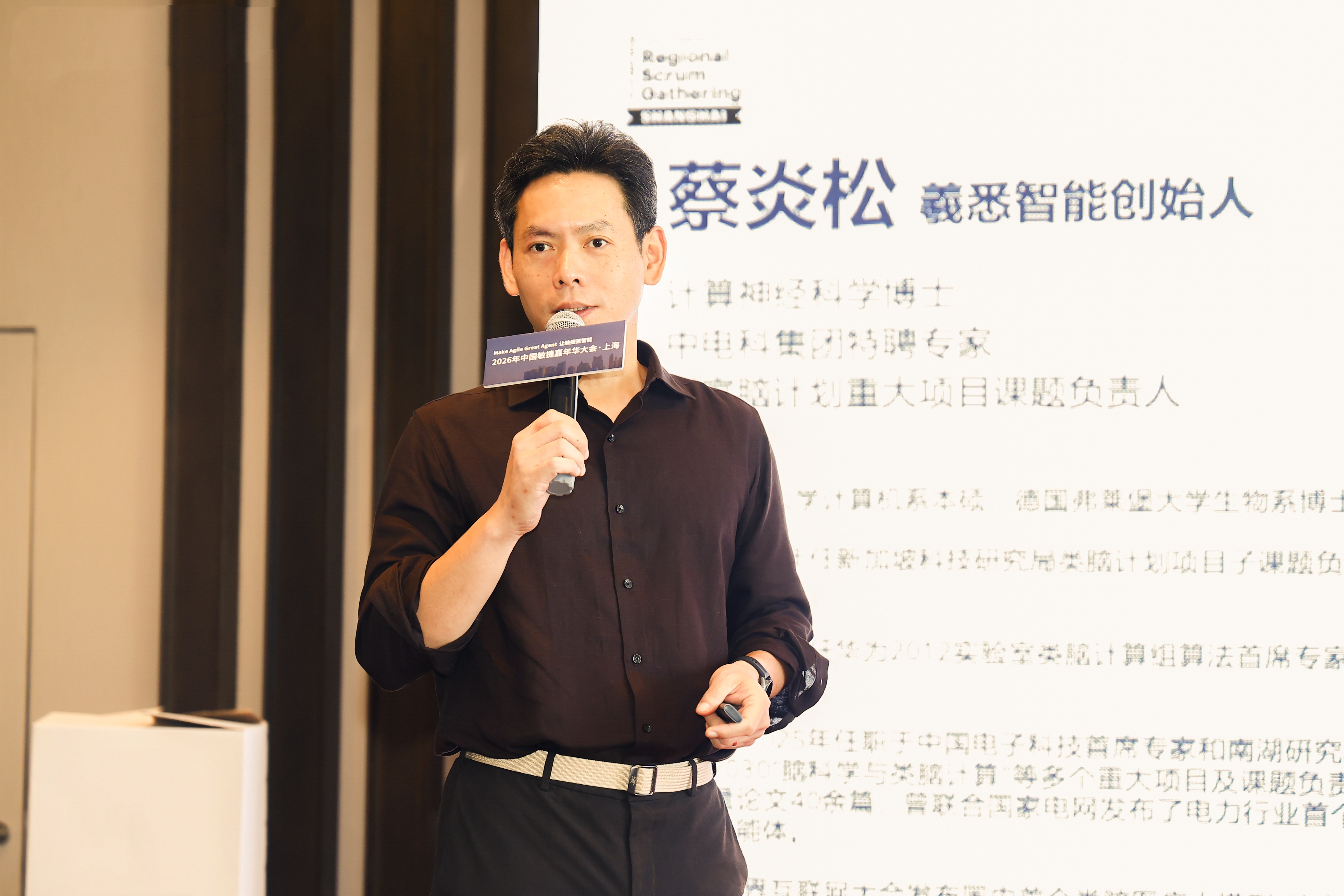
At the 2024 World Internet Conference, Dr. Chua introduced NaoQi-SuWen (脑启-素问), China’s first brain-inspired medical language model. In 2025, leveraging common core technologies, Qixin (栖心), a language model designed for emotional companionship, was also launched. He also contributed to the development of a general-purpose neuromorphic cloud platform capable of supporting both large language models and brain simulations up to 10 billion neurons.
Brain-inspired technologies developed under his leadership have been deployed across healthcare, electric power, energy, transportation, and agriculture, reflecting end-to-end experience spanning algorithm research, software development, and large-scale cloud-edge computing systems.
Building on this foundation, Xisiid Intelligence has assembled a multi-disciplinary team spanning computational neuroscience, neuromorphic computing, large-model algorithms, cognitive science, and systems engineering. The team combines rigorous academic research with extensive industry experience, with research published in leading international venues including Nature Machine Intelligence and IEEE Transactions on Neural Networks and Learning Systems.
From Co-Creation to Own Intelligence
Xisiid Intelligence is currently working with institutional clients across professional domains including investment decision-making, legal due diligence, and enterprise operational governance, validating its Brain-Inspired Self-Evolving Foundation System in real-world workflows.
Through continued human-AI interaction, this experience can be consolidated into persistent and reusable organizational memory, enabling the system to develop capabilities increasingly aligned with each organization’s expertise and technical know-how.
The system can also be deployed on-premise, allowing mission-critical data, proprietary workflows, and accumulated organizational knowledge to remain within users’ private domain. Over time, organizations may then build an intelligence asset that is progressively accumulated and owned within the organization itself.
Xisiid Intelligence sees this as critical to the transition of AI from mere content generation to reliably completing real-world tasks, and continually evolving through real-world execution. Its long-term vision is to enable every individual and enterprise to build intelligence they truly own — intelligence that learns, evolves, and compounds over time.
This is “Own Intelligence.”